Male Sexual Health Problems: Symptoms, Causes & Treatment
Medically reviewed by Dr Ravindra Sharma, B.H.M.S, Reg. No. H018423 (Homoeopathic Medicine Board, Lucknow, UP) · Reviewed on Sep 12, 2026
Quick read
Male sexual health problems can involve desire, erections, ejaculation, orgasm, discomfort or fertility. Causes may be physical, psychological, medication-related, lifestyle-related, or a combination, so the useful first step is to identify the exact pattern and how long it has been present. This guide covers common symptoms, evaluation, treatment approaches and when to seek medical help.

Sexual difficulties are common, but men often wait before talking about them. That delay can turn a manageable concern into a source of ongoing anxiety, relationship strain or unnecessary self-treatment.
There is also no single condition called a “male sexual problem.” Erection difficulties, premature ejaculation, low sexual desire, orgasm problems, discomfort and fertility concerns have different patterns and may need different evaluations. The same symptom can have more than one cause.

What counts as a male sexual health problem?
A sexual problem is usually worth discussing with a doctor when it is persistent or recurrent, causes distress, interferes with a relationship or sexual activity, or represents a clear change from your usual pattern. Common concerns include difficulty getting or keeping an erection, ejaculating earlier than desired, reduced sexual desire, difficulty reaching orgasm, pain or discomfort, and concerns related to fertility.
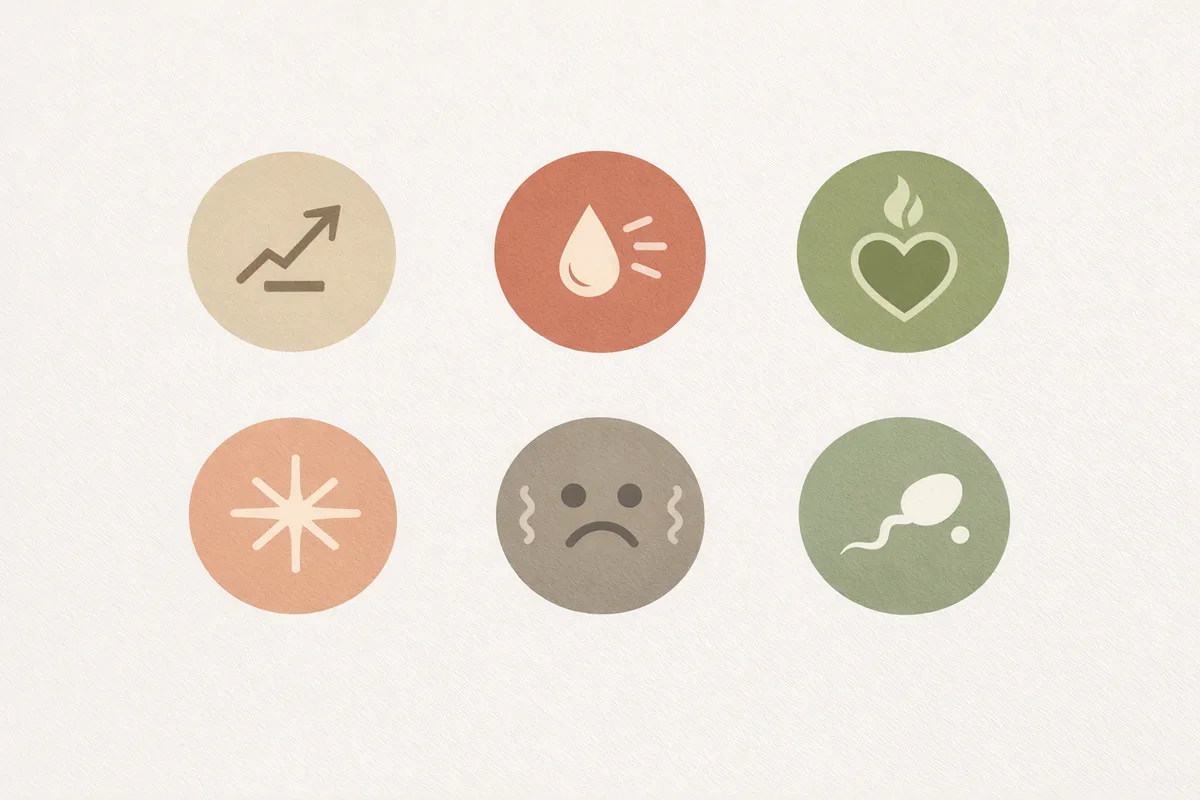
Common male sexual health concerns
- Erectile dysfunction: repeated difficulty getting or maintaining an erection firm enough for satisfactory sexual activity.
- Premature ejaculation: ejaculation that happens sooner than desired and is associated with reduced control or distress.
- Low sexual desire: a persistent reduction in sexual interest that may be linked with medical, psychological, relationship or medication factors.
- Orgasm or ejaculation difficulties: delayed ejaculation, inability to ejaculate, or other changes in orgasm or ejaculation.
- Pain or penile problems: pain, curvature, skin or foreskin concerns, or other symptoms that make sexual activity uncomfortable.
- Male fertility concerns: difficulty conceiving, which may involve sperm production, sperm transport, ejaculation or other reproductive factors.
Why do sexual problems happen?
Sexual function depends on several systems working together, so causes are often mixed rather than purely physical or purely psychological. Diabetes, high blood pressure, cardiovascular disease, obesity, hormonal disorders, neurologic conditions and some medicines can affect sexual function. Smoking, poor sleep, heavy alcohol use, inactivity and chronic stress can also contribute.
Mental health and relationship factors matter too. Anxiety, depression, performance worry, conflict, communication difficulties and previous negative sexual experiences can affect desire, erection, arousal or ejaculation. Having a psychological contribution does not mean the symptoms are imaginary; it means the treatment plan may need to address more than one factor.
Some traditional concerns in India, such as worry about semen loss, nightfall or masturbation, can also create significant distress even when the underlying bodily function is normal. Accurate information can prevent unnecessary treatment and help a person focus on the symptom that actually needs evaluation.[7]
When should you see a doctor?
An occasional change after stress, illness, poor sleep or heavy drinking is not automatically a disorder. A medical review becomes more useful when the problem keeps happening, starts suddenly without an obvious explanation, causes significant distress, affects a relationship, or occurs alongside symptoms such as reduced exercise tolerance, urinary symptoms, genital pain, or other health changes.
Note: Persistent erectile difficulties can share vascular risk factors with cardiovascular disease. ED therefore deserves a broader health review rather than being treated only as a bedroom problem.[1][2]
How a doctor evaluates male sexual problems
A good evaluation starts with the story: what changed, when it started, whether it happens every time or only in certain situations, and whether erections, desire, ejaculation and orgasm are all affected. Doctors may also ask about sleep, stress, mood, alcohol, tobacco, medicines, diabetes, blood pressure and other medical conditions.[4][5]
The examination and tests depend on the complaint. Some men need no extensive testing, while others may benefit from targeted blood tests or further specialist assessment. Hormone testing is not automatically required for every sexual symptom; it is considered when the history and examination make it clinically relevant.[3]
Treatment depends on the underlying problem
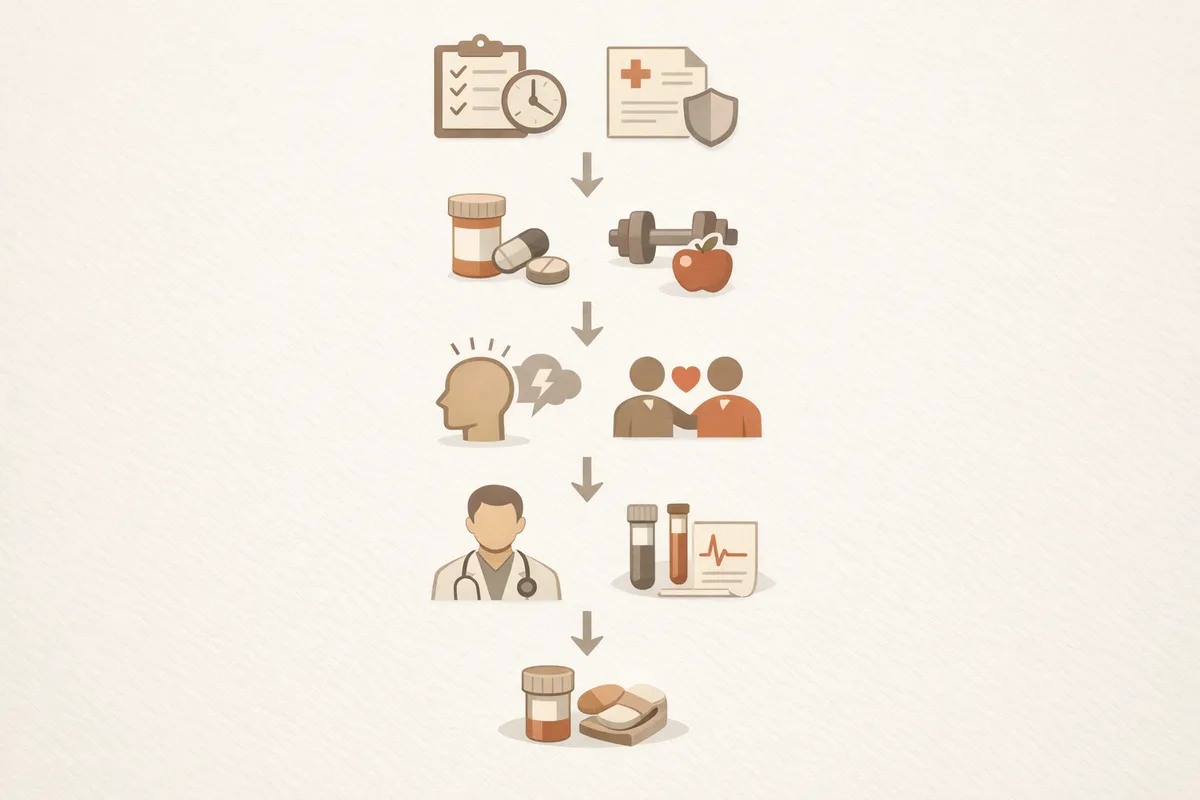
There is no universal “sex power” treatment. For erectile dysfunction, treatment can include lifestyle and risk-factor management, counselling when appropriate, and prescription medicines or other interventions chosen after clinical assessment. For premature ejaculation, behavioural approaches, counselling and selected medicines may be considered depending on the type and severity.[3] Low desire may require review of sleep, mood, relationships, medicines and hormonal or medical factors.
The key principle is to treat the cause and the symptom together when necessary. A person with erection difficulty related to diabetes may need better metabolic care as well as treatment for erections. Someone whose symptoms are strongly linked to performance anxiety may need a different combination of support. Self-prescribing sexual medicines or supplements without knowing the cause can delay appropriate care.
Lifestyle measures that support sexual health
- Regular physical activity and maintaining a healthy weight can support vascular and metabolic health.[6]
- Adequate sleep matters because fatigue and sleep disorders can affect desire, mood and sexual function.
- Stopping smoking and limiting alcohol can reduce important risk factors for sexual dysfunction.
- Managing diabetes, blood pressure, cholesterol and other long-term conditions is part of sexual healthcare.
- Open communication with a partner can reduce avoidable pressure and misunderstandings.
Common myths that can make the problem worse
A larger penis is not a prerequisite for satisfactory sexual activity, and many internet claims about permanent enlargement are not supported by good evidence. Semen loss from masturbation or ordinary nocturnal emission does not by itself mean that the body is becoming weak. Likewise, a single episode of erection difficulty does not prove erectile dysfunction.[7]
Another common mistake is to judge sexual health only by how long intercourse lasts. Sexual satisfaction depends on desire, arousal, erection quality, ejaculation control, comfort, communication and the expectations of both partners. That is why a proper history is more useful than comparing yourself with numbers seen on internet forums.
How to prepare for a confidential consultation
Before the appointment, note the main symptom, how long it has been present, how often it occurs, what makes it better or worse, and whether it happens during masturbation or only with a partner. Bring a list of medicines and supplements and mention relevant conditions such as diabetes, hypertension, thyroid disorders or depression. Honest answers usually make the assessment faster and more accurate.
For erection concerns, a short validated questionnaire can help structure the discussion. Erecto's Erection Self-Test (IIEF-5) can provide a private starting point before a consultation. For people trying to understand what kind of doctor to see, Sexology: What It Is & Why It Matters explains the role of sexology and when a specialist evaluation can be useful.
Erecto's Dr Ravindra Sharma (B.H.M.S) profile provides his professional background and registration details for patients considering a consultation.
Where to go next based on your main symptom
If the main issue is erection quality, the dedicated Erecto guide on Erectile Dysfunction: Causes, Diagnosis & Treatment goes deeper into assessment and management. For ejaculation happening sooner than desired, see शीघ्रपतन का इलाज: कारण, लक्षण, डायग्नोसिस और उपचार. For broader questions about finding a doctor, the sexologist in India page explains the service and doctor pathway.
The bottom line
Persistent sexual problems are worth discussing without embarrassment. The most useful approach is to identify the exact symptom, look for medical and psychological contributors, and choose treatment based on the diagnosis rather than on advertising claims or a one-size-fits-all remedy. Getting the right evaluation early can also uncover broader health issues that deserve attention.
References
- Kloner RA, et al. Erectile dysfunction and cardiovascular disease. Journal of the American College of Cardiology. 2003;42(11):1858–1864. https://doi.org/10.1016/j.jacc.2003.08.015
- Montorsi P, et al. The artery size hypothesis: a macrovascular link between erectile dysfunction and coronary artery disease. American Journal of Cardiology. 2005;96(12B):19M–23M. https://doi.org/10.1016/j.amjcard.2005.07.006
- European Association of Urology. EAU Guidelines on Sexual and Reproductive Health, Sexual Dysfunctions. 2026. https://uroweb.org/guidelines/sexual-and-reproductive-health
- Mayo Clinic. Erectile dysfunction — symptoms and causes. https://www.mayoclinic.org/diseases-conditions/erectile-dysfunction/symptoms-causes/syc-20355776
- National Institute of Diabetes and Digestive and Kidney Diseases. Erectile Dysfunction (ED). https://www.niddk.nih.gov/health-information/urologic-diseases/erectile-dysfunction
- World Health Organization. Physical activity. 2024. https://www.who.int/news-room/fact-sheets/detail/physical-activity
- Avasthi A, et al. Sexuality research in India: An update. Indian Journal of Psychiatry. 2011;53(4):299–310. https://pmc.ncbi.nlm.nih.gov/articles/PMC3146233/
- Help-Seeking Behaviour and Care Delays in Indian Patients Attending a Speciality Sexual Health Clinic: A Retrospective Cohort study. 2026. https://pmc.ncbi.nlm.nih.gov/articles/PMC13061147/
Why should you trust this article?
- Medically reviewed by Dr Ravindra Sharma, B.H.M.S, with 40 years of clinical experience (in practice since 1986).
- Registered medical practitioner — Reg. No. H018423 (Homoeopathic Medicine Board, Lucknow, UP), verifiable in the public register.
- Trained at State K.G.K. Homoeopathic Medical College & Hospital, Moradabad, Up, Homoeopathic Medicine Board, Lucknow, UP (1986).
- Every claim is backed by the 8 cited sources in the References section — clinical guidelines, peer-reviewed research and established medical institutions, linked so you can verify them yourself.
- Last medically reviewed on Sep 12, 2026; Erecto - Men's Health Clinic re-checks published health content against current medical consensus.
Frequently Asked Questions
What are the most common sexual problems in men?
Common concerns include erectile dysfunction, premature ejaculation, low sexual desire, orgasm or ejaculation difficulties, pain or penile problems, and fertility concerns. More than one can occur at the same time.
Are male sexual problems always caused by low testosterone?
No. Sexual symptoms can have many causes, including cardiovascular and metabolic disease, medicines, poor sleep, stress, anxiety, depression, relationship factors and hormonal problems. Testosterone testing is considered when the clinical history suggests it may be relevant.
Can stress cause erectile dysfunction or premature ejaculation?
Yes. Stress and performance anxiety can affect erections, arousal and ejaculation control. Physical and psychological contributors can also coexist, so persistent symptoms are appropriately evaluated rather than attributed to stress alone.
When should a man see a sexologist or doctor for a sexual problem?
Consider a consultation when a problem is persistent or recurrent, causes distress, affects a relationship, or is associated with other health symptoms. A doctor can help distinguish an occasional variation from a condition that needs evaluation.
Are sexual health problems treatable?
Many sexual health problems can be managed with appropriate care, but treatment depends on the diagnosis, contributing factors and individual circumstances. A clinician can explain the options that fit the specific problem.
Can lifestyle changes improve male sexual health?
They can support overall sexual health, particularly when problems are linked to cardiovascular or metabolic risk factors. Exercise, healthy weight, adequate sleep, smoking cessation, limiting alcohol and good control of chronic conditions may all help.
This information is general and educational. It is not a diagnosis; please discuss your situation with the doctor during your consultation.
Related topics
Private consultation
Talk to the doctor about this
Private consultation with a registered doctor — describe your concern before you decide anything.
Share this article
Get new articles by e-mail
One confirmation e-mail first — we never publish or share your address.
Related articles

Sexology: The Missing Link in Your Health Management
Sexology is the medical science of human sexuality — sexuality is what it studies, sexology is the discipline that studies it. A qualified sexologist is a registered doctor who treats conditions like …
शीघ्रपतन का इलाज: कारणों से लेकर डायग्नोसिस और उपचार तक पूरी जानकारी
शीघ्रपतन का मतलब है योनि-प्रवेश से पहले या उसके लगभग 1 मिनट के भीतर (आजीवन प्रकार) या पहले से काफ़ी कम समय, प्रायः 3 मिनट या उससे कम, में (अर्जित प्रकार) स्खलन …
Erectile Dysfunction: Causes, Diagnosis and Treatment
Erectile dysfunction is the persistent inability to get or keep an erection firm enough for satisfactory sex. It becomes more common with age, but age itself is not the cause: most long-standing …